
Canine Brucella Diagnosis: Modern Methods for Detecting Brucella canis Infection in Dogs
Introduction
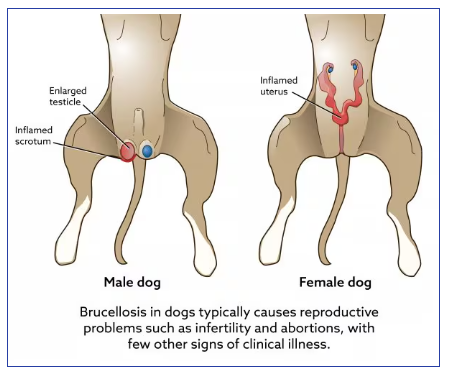
Canine Brucella diagnosis is essential for veterinarians, breeders, and laboratory researchers because Brucella canis is a highly contagious bacterial pathogen that causes reproductive failure in dogs. This zoonotic bacterium can lead to infertility, abortions, epididymitis, and chronic infections, making accurate diagnostic testing critical for disease control.
Early and reliable Canine Brucella diagnosis allows veterinarians to prevent the spread of infection in kennels, breeding facilities, and companion animals.
What is Canine Brucellosis?
Canine brucellosis is a bacterial disease caused by Brucella canis, a Gram-negative intracellular pathogen belonging to the genus Brucella. The organism primarily infects the reproductive organs of dogs and spreads through:
Mating with infected animals
Contact with contaminated reproductive fluids
Exposure to aborted fetuses or placental tissues
Blood and urine from infected dogs
Infected dogs may remain asymptomatic carriers, which makes laboratory testing crucial for accurate detection.
Clinical Signs That Require Canine Brucella Diagnosis
Veterinarians often recommend Canine Brucella diagnosis when dogs show reproductive or systemic abnormalities.
Common symptoms include:
In Female Dogs
Late-term abortion
Vaginal discharge
Infertility
Weak or stillborn puppies
In Male Dogs
Epididymitis
Orchitis (testicular inflammation)
Reduced sperm quality
Testicular atrophy
Systemic Signs
Lethargy
Lymphadenopathy
Diskospondylitis (spinal infection)
Because symptoms may be mild or absent, laboratory testing remains the gold standard for diagnosis.
Laboratory Methods for Canine Brucella Diagnosis
Several diagnostic approaches are used in veterinary laboratories to detect Brucella canis infections.
1. Serological Tests
Serological assays detect antibodies against Brucella canis in canine serum.
Common tests include:
Rapid Slide Agglutination Test (RSAT)
2-Mercaptoethanol RSAT
ELISA assays
Agar Gel Immunodiffusion (AGID)
These tests are widely used for screening breeding dogs and kennel populations.
2. PCR Molecular Detection
Polymerase Chain Reaction (PCR) methods provide highly sensitive detection of Brucella canis DNA.
Advantages include:
High specificity
Early detection before seroconversion
Rapid results
Detection in blood, semen, urine, or tissue samples
PCR assays are increasingly used in advanced veterinary diagnostic laboratories.
3. Bacterial Culture
Isolation of Brucella canis through bacterial culture remains the definitive diagnostic method.
However, culture requires:
Biosafety level-3 laboratory conditions
Specialized media
Long incubation times
Because of these limitations, culture is often combined with serological or molecular testing.
Importance of Early Canine Brucella Diagnosis
Early detection of infection is essential for controlling disease transmission.
Benefits include:
Preventing outbreaks in breeding kennels
Protecting animal reproductive health
Reducing zoonotic risk to humans
Implementing quarantine or removal strategies
Routine Canine Brucella diagnosis screening is recommended before breeding or introducing new dogs into a kennel.
Prevention and Control Strategies
Effective control of canine brucellosis relies on both diagnosis and biosecurity measures:
Regular screening of breeding dogs
Isolation of infected animals
Proper sanitation of breeding environments
Avoiding mating with untested animals
Veterinary monitoring of reproductive health
Currently, no fully effective vaccine exists for Brucella canis, making diagnostic testing the most important preventive tool.
Conclusion
Accurate Canine Brucella diagnosis is essential for maintaining canine reproductive health and preventing the spread of Brucella canis infections. Advances in serological testing, PCR diagnostics, and microbiological culture techniques provide veterinarians and laboratories with reliable tools to detect this pathogen.
Routine screening programs combined with modern diagnostic technologies are the best strategies to protect both animal and public health.
Recent Posts
-
CUT&Tag vs CUT&RUN Which Epigenomics Method Should You Choose?
CUT&Tag vs CUT&RUN: Which Epigenomics Method Should You Choose? The field of epigenetics has undergo …17th Mar 2026 -
CUT&Tag A Next-Generation Method for High-Resolution Epigenomic Profiling
CUT&Tag A Next-Generation Method for High-Resolution Epigenomic Profiling The rapid evolution of epi …17th Mar 2026 -
ChIP-seq vs CUT&RUN vs CUT&Tag
ChIP-seq vs CUT&RUN vs CUT&Tag: Advanced Methods to Study Epigenetics Epigenetics research has rapid …17th Mar 2026